

We spend nearly one third of our lives sleeping. Yet we often know very little about the environment in which our body recovers each night.
Many factors can influence sleep quality, including light, noise, indoor air quality, electromagnetic fields and the characteristics of the natural environment.
Understanding these elements is the first step toward creating a healthier and more harmonious living space.
| A healthier home begins with a better understanding of the environment in which we live. |
1. The Physical Environment of the Bedroom
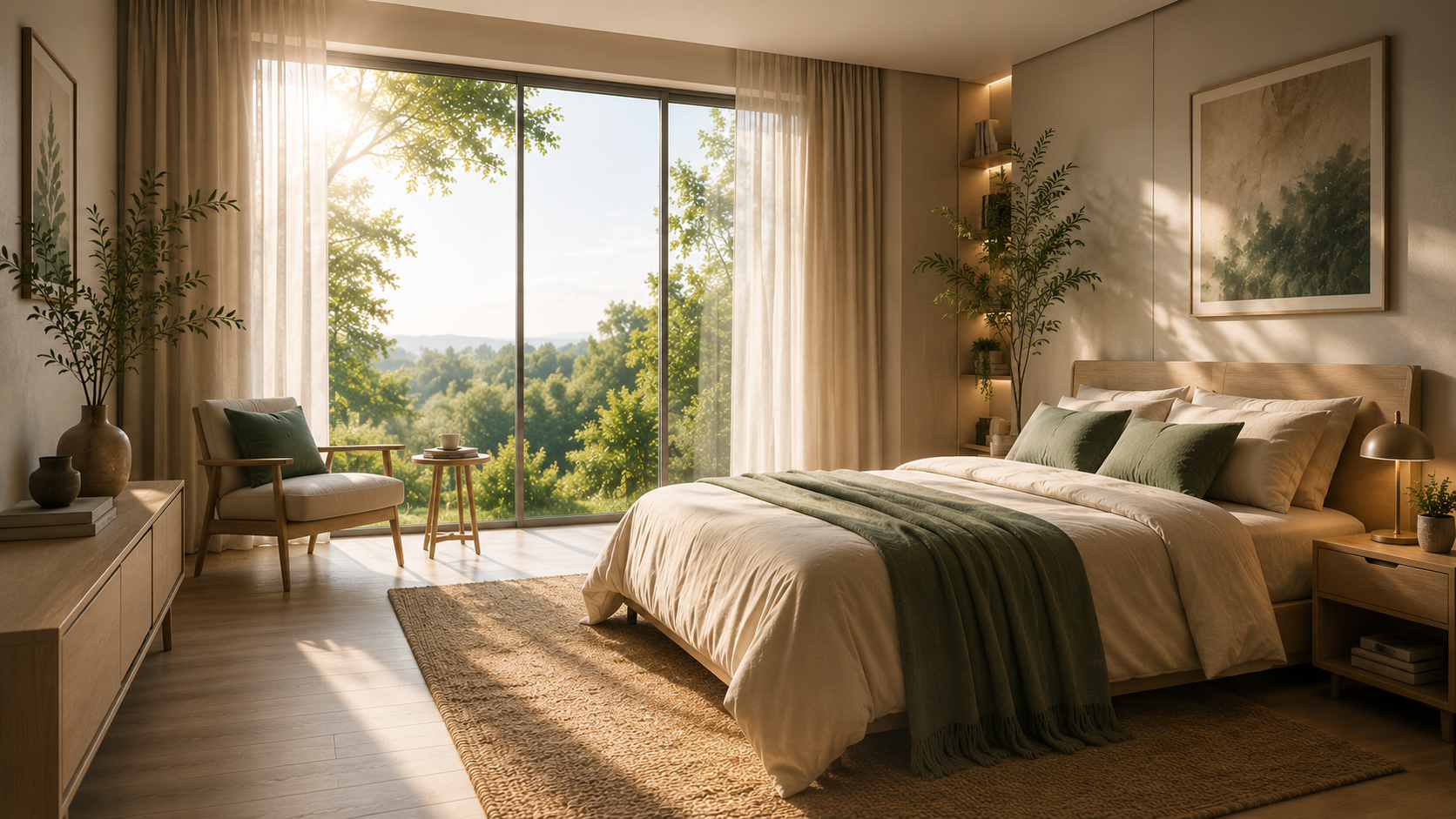
Before exploring more specialised environmental factors, it is important to consider the physical conditions of the bedroom itself. Simple elements such as temperature, light, noise and air quality can have a significant influence on sleep quality.
A bedroom that is too warm, too cold or exposed to excessive artificial light may disturb the body's natural sleep cycle. Likewise, repeated background noise can reduce the restorative quality of sleep, even when it does not fully wake us.
Fresh air, good ventilation and appropriate humidity also contribute to a healthier and more comfortable sleeping environment. Together, these factors create the foundation for restful sleep and overall well-being.
For this reason, every environmental assessment should begin with a careful observation of the bedroom before moving on to more specialised measurements.
 |
Key Insights A healthy sleeping environment begins with the fundamentals: comfortable temperature, fresh air, appropriate lighting and a quiet atmosphere. These factors provide the foundation for restorative sleep. |
2. The Invisible Environment
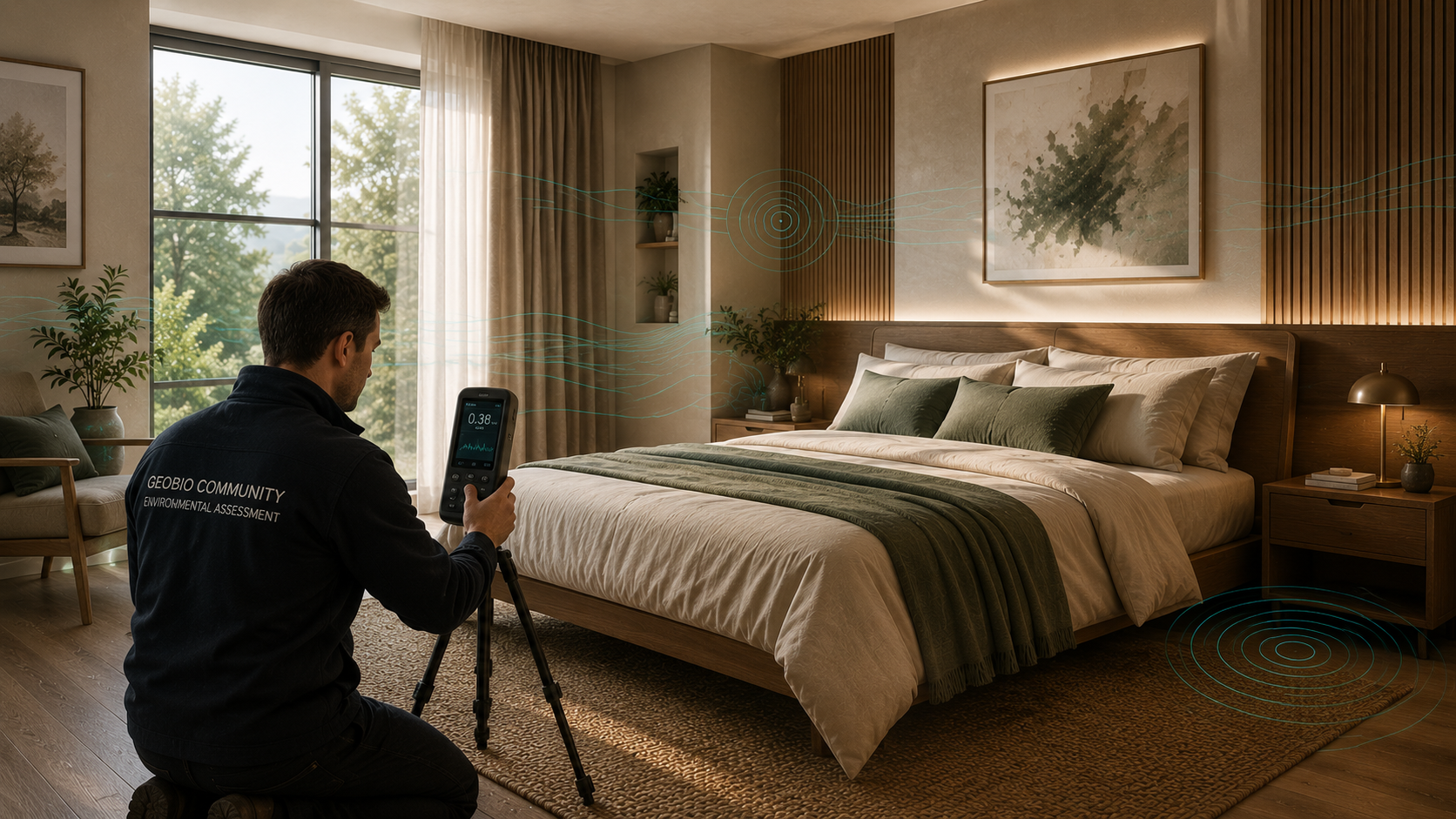
Beyond the visible characteristics of a bedroom lies another aspect of the living environment that cannot be perceived with the naked eye. Electrical fields, magnetic fields, radiofrequency emissions and naturally occurring geobiological features may all contribute to the overall environmental profile of a home.
These factors are not necessarily noticeable during everyday life, yet they can be identified and assessed using appropriate measurement instruments and established investigation methods. Understanding their presence allows for a more comprehensive evaluation of the indoor environment.
An environmental assessment therefore combines direct observations with objective measurements to provide a clearer picture of the conditions within a home. This scientific approach helps identify potential areas for improvement and supports informed decisions when creating healthier living spaces.
 |
Key Insights Not everything that influences a home environment can be seen. Combining visual observation with objective measurements provides a more complete understanding of the living space. |
3. Looking at the Home as a Whole
No single factor can fully explain the quality of a living environment. A healthy home is the result of many elements working together, from the physical characteristics of the bedroom to the invisible environmental conditions that surround us.
For this reason, a comprehensive environmental assessment should never focus on a single measurement or observation. Instead, it considers the home as a whole, combining visual inspection, objective measurements and a structured methodology to better understand the indoor environment.
The goal is not to create concern, but to provide reliable information that helps homeowners make informed decisions and create living spaces that promote comfort, balance and long-term well-being.

 |
Key Insights A healthier home is achieved through understanding, not assumptions. Every environment is unique and deserves an objective, comprehensive assessment. |
Conclusion
A healthy home cannot be defined by a single factor. Sleep quality and overall well-being result from the interaction of many environmental elements, both visible and invisible.
Understanding these factors through careful observation and objective measurements provides a more complete picture of the living environment.
Rather than relying on assumptions, a structured environmental assessment helps identify opportunities to improve comfort and create a healthier home.
Every property is unique, and every assessment should be approached with the same principles: scientific observation, objective measurements and a comprehensive understanding of the environment.
Creating healthier living spaces begins with better knowledge.
About the Author
 |
David Georgiu is an environmental consultant specialising in geobiology and indoor electromagnetic assessments. Through GEOBIO Community, he helps homeowners and professionals better understand their living environments using a structured approach that combines scientific measurements, environmental observation and practical recommendations. His mission is to make environmental assessment accessible, educational and understandable for everyone. |
Would you like to better understand your home environment?
Discover our environmental assessment services and learn how a comprehensive evaluation can help you better understand the conditions within your home.